

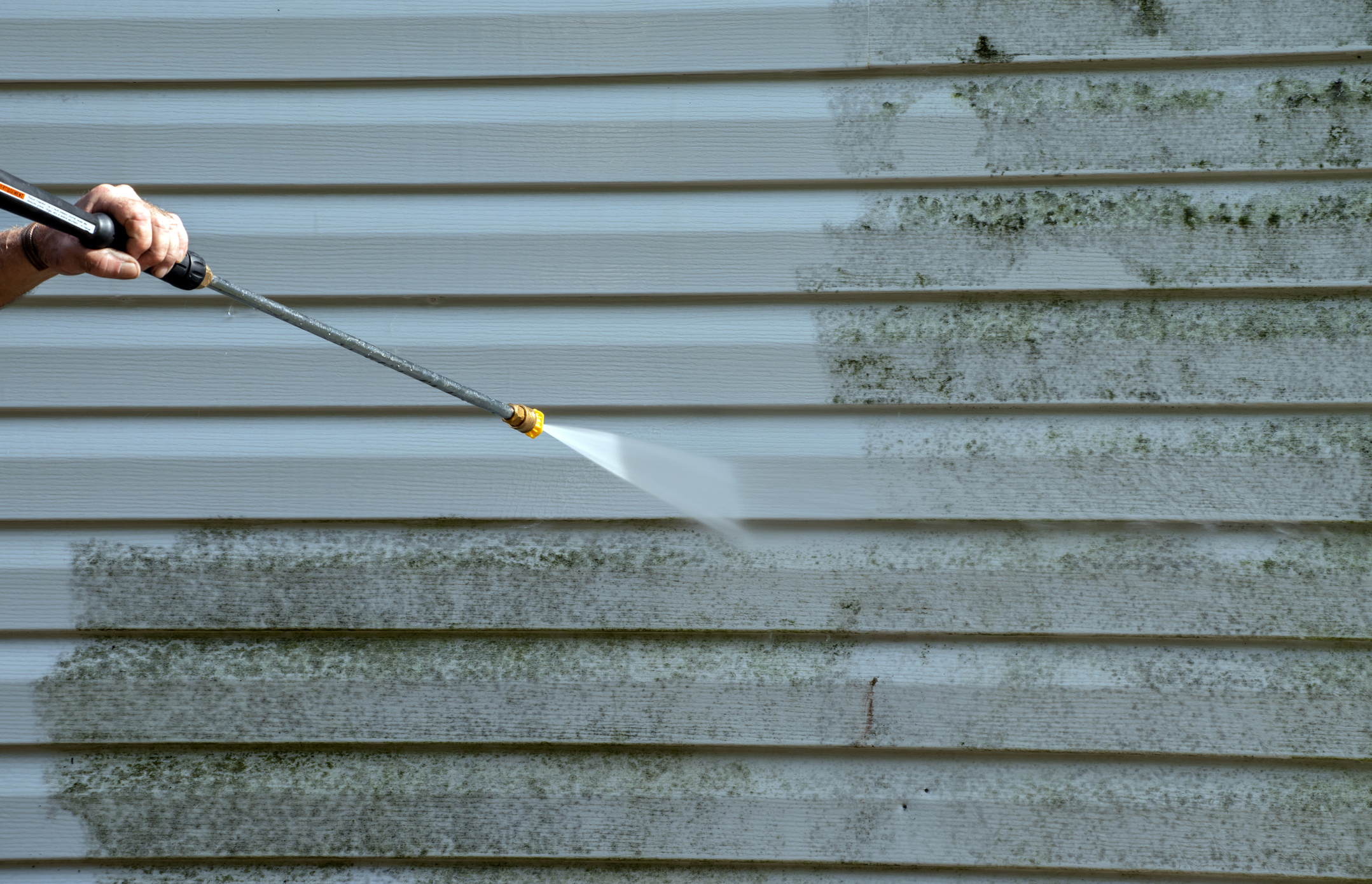
Hiring a pressure washer for a weekend feels like a sensible, cost-effective decision. And for some jobs, cleaning a flat concrete slab in the backyard, for instance, DIY pressure cleaning is genuinely fine. But for house exteriors, roofs, delicate surfaces, and any painted or coated material, the gap between what a professional does and what most homeowners do with a hired unit can cost thousands to fix.
These are the mistakes we see most often, and in some cases, are asked to remediate.
Mistake 1: Using High Pressure on the House Exterior
This is by far the most common and most expensive mistake. High pressure on weatherboard cladding, render, painted brick, or Colorbond forces water behind cladding, strips paint, and can dislodge render. The damage isn't always immediately obvious, water forced behind cladding may not manifest as visible damp for weeks, by which point it's caused mould growth or timber rot in the wall cavity.
House exteriors should always be cleaned with soft washing, low pressure plus professional cleaning solutions. Full stop.
Mistake 2: Pressure Washing Roof Tiles
High pressure strips the protective surface layer from concrete tiles, dislodges ridge cap mortar, and can crack terracotta tiles. The roof then needs more frequent cleaning (because the stripped surface grows organic matter faster), may develop leaks at dislodged ridge caps, and the warranty on the tiles is voided. Roof soft washing with appropriate chemistry is the only method that should be used on tiled roofs.
Mistake 3: Wrong Nozzle or Distance on Timber
Timber decks and timber cladding are among the most damage-prone surfaces. High-pressure water directed too close to timber, or using a narrow-angle nozzle, physically damages the wood fibres, raising grain, splitting boards, and removing the surface finish. A professional uses a wide fan nozzle at the correct distance, combined with appropriate cleaning chemistry, to clean timber safely.
Mistake 4: Stripping Paver Joint Sand
Too much pressure on a paved driveway or path blasts out the sand between pavers. The immediate result looks clean enough, but without joint sand, pavers become unstable, shift, and eventually create trip hazards and drainage problems. Correcting this requires re-sanding and sometimes resetting pavers. Professional surface cleaners and correct pressure settings prevent this.
Mistake 5: Hitting Electrical Fixtures
Outdoor power points, sensor lights, security cameras, and junction boxes are not sealed to withstand direct high-pressure water. A stream of water into an outdoor power point can cause a short, damage the fitting, and in worst cases cause electrical hazards. Professionals identify and protect these before starting work.
Mistake 6: Using the Wrong Cleaning Products
Household bleach is sometimes used as a DIY cleaning solution for mould. At high concentrations or used repeatedly, bleach damages painted surfaces, kills surrounding vegetation, and may void paint or cladding warranties. Professional biodegradable cleaning solutions are specifically formulated for exterior surfaces, effective against organic growth without the collateral damage.
Mistake 7: Working at Height Without Proper Equipment
Attempting to clean gutters, eaves, or upper-storey walls from a ladder with a high-pressure wand is genuinely dangerous. The reaction force from a pressure wand is significant and can destabilise a ladder. Working at heights regulations exist for exactly this reason. Professional operators use ground-level soft washing equipment with appropriate reach to avoid the need for ladders entirely on most properties.
When DIY Is Fine
To be fair: a domestic pressure washer on a flat, unsealed concrete backyard slab, a garden path, or retaining wall is entirely reasonable. Low stakes, robust surface, low risk. The key is understanding which surfaces can handle high pressure and which cannot, and being honest with yourself about whether you have the equipment and knowledge to do the job safely.
If you're not sure, the cost comparison almost always favours professional cleaning when you factor in the risk of expensive remediation work.
Questions about a specific job? Call us on 0483 822 051, happy to give you an honest assessment of whether it's a DIY job or not.