

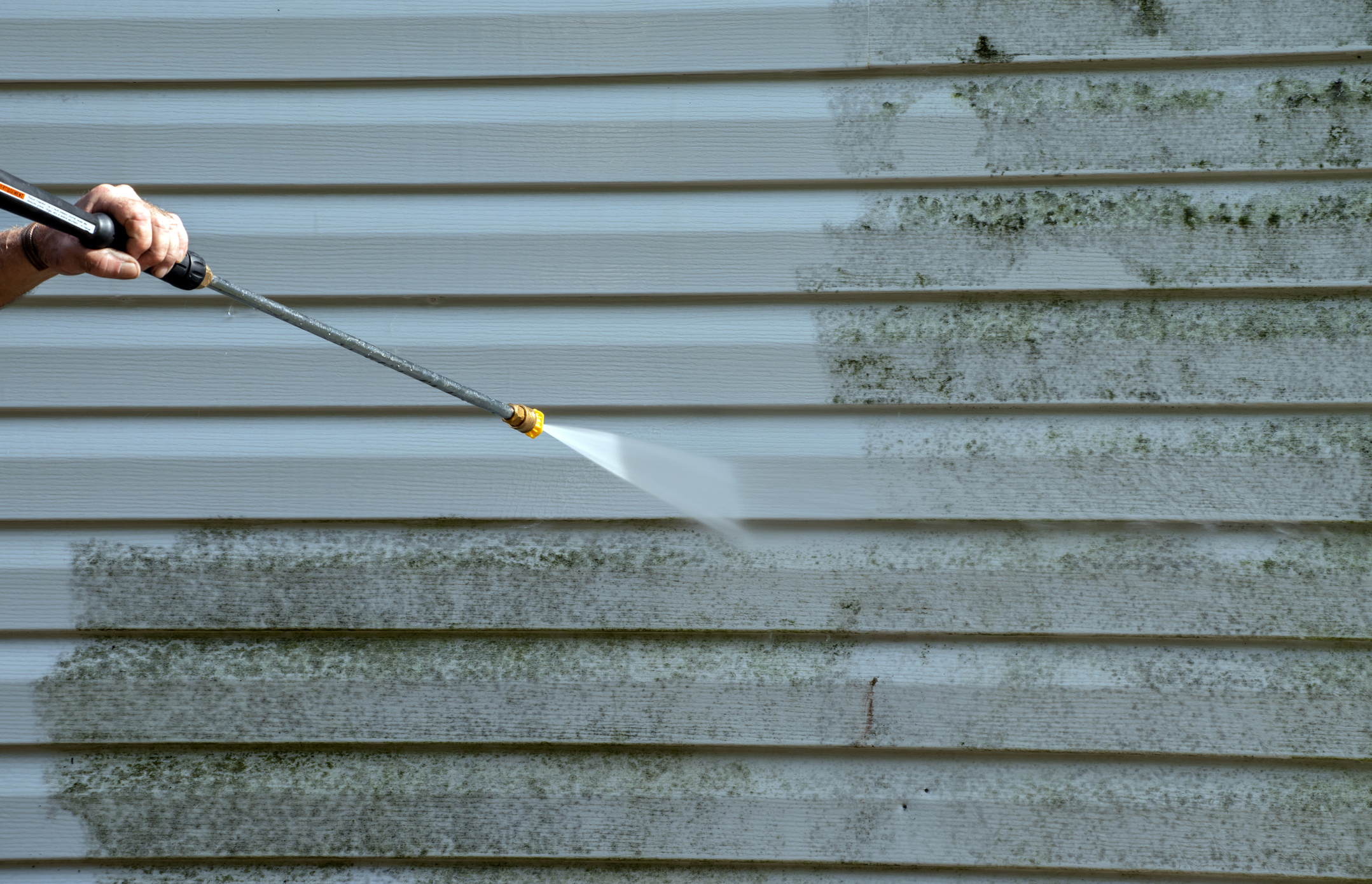
Ask most homeowners what pressure cleaning involves and they'll picture high-pressure water blasting dirt off a surface. That description is accurate for a driveway, but use the same approach on your roof, your rendered walls, or your weatherboard cladding and you're looking at cracked tiles, stripped paint, forced water ingress, and a repair bill that dwarfs the cost of the original clean.
Understanding the difference between soft washing and pressure cleaning isn't just technical trivia, it's the difference between a result that lasts and damage that's expensive to fix.
What Is Pressure Cleaning?
Pressure cleaning (also called pressure washing or high-pressure cleaning) uses water delivered at high pressure, typically 2,000-4,000 PSI, to physically blast dirt, grime, and organic growth off hard surfaces. The force of the water does the cleaning work. It's fast, highly effective on appropriate surfaces, and delivers immediately visible results.
Professional pressure cleaning equipment operates at significantly higher pressure and flow rates than domestic units available from hardware stores. This combination of pressure and volume is what allows commercial surface cleaners to remove deeply embedded staining from concrete that a domestic unit simply can't shift.
Best suited for: Concrete driveways, paved pathways, brick pavers, pool surrounds, retaining walls, concrete footpaths, and commercial hard surfaces.
What Is Soft Washing?
Soft washing uses water delivered at very low pressure, roughly equivalent to a standard garden hose, combined with professional-grade biodegradable cleaning solutions. The chemistry does the cleaning work, not the pressure. Soft washing solutions are specifically formulated to kill organic growth (mould, algae, lichen, mildew) at the cellular level, break down dirt and staining, and then rinse clean.
Because soft washing kills organic growth rather than just removing it mechanically, the results last significantly longer, typically 18-24 months compared to 6-12 months for pressure washing alone on the same surfaces.
Best suited for: House exteriors (all types), roofs (tiled and metal), rendered walls, weatherboard cladding, painted surfaces, vinyl, Colorbond, eaves, soffits, and solar panels.
Why Using the Wrong Method Causes Damage
This is where many DIY cleaning attempts and inexperienced operators cause problems. High-pressure cleaning on inappropriate surfaces causes:
- Roof damage: High pressure strips the protective granules from concrete tiles, dislodges pointing from ridge caps, can crack terracotta tiles, and forces water under laps in metal roofing. Many tile manufacturers explicitly void warranties when high-pressure cleaning is used.
- Paint stripping: High pressure on painted surfaces, particularly older or chalky paint, strips the coating and can require a full repaint to remedy.
- Water ingress: High-pressure water directed at joints, gaps, or weatherboard cladding can force water behind the surface and into wall cavities, causing mould, rot, and structural damage that is both costly and slow to manifest.
- Paver damage: While pavers can generally be pressure cleaned, too much pressure or the wrong nozzle angle blasts out joint sand and can chip or pit softer stone surfaces.
What About Rendered Walls?
Render is one of the most commonly mishandled surfaces in the pressure cleaning industry. Modern acrylic renders are fairly robust, but older sand-and-cement renders, common in Sunshine Coast homes built before the 1990s, can be damaged or dislodged by high pressure. Soft washing is always the correct method for rendered walls, full stop.
The Combined Approach
For many properties, the best result comes from using both methods appropriately in the same visit. A full property clean might involve soft washing the house exterior and roof, then switching to high-pressure cleaning for the driveway, pathways, and pool surrounds. Using the right method for each surface is exactly what separates professional results from DIY outcomes.
How to Tell if a Contractor Knows What They're Doing
A simple test: ask any pressure cleaning company whether they use soft washing for house exteriors. If they say they just use high pressure on everything, walk away. Any professional operator with genuine experience will immediately distinguish between surfaces and methods. At Surface Co., we assess every surface before we touch it and use the correct approach every time.
Questions about which method your property needs? Call us on 0483 822 051 or get an instant quote, we're always happy to talk through what's right for your specific situation.